

TECHNOLOGY
TRIFECTA OF TECHNOLOGY

What it is
Optionally crewed platforms with advanced payloads now enable persistent, low cost, high frequency access to the ocean without traditional diver / ship / human operational limits.
What it enables
We can track, interpret and extrapolate trends in met ocean information to actively intercept currents and flows that bring the bulk of Sargassum ashore.

Why it beats traditional approaches
Pre-positioned network of buoys positioned to allow Sargassum to drift into capture booms for onshore processing.
HOW IT WORKS
Sea Sweeper deploys an offshore interception network designed to identify, intercept, and manage sargassum blooms before they reach vulnerable coastlines. Intercepted biomass is contained and handled in controlled conditions, minimizing ecological damage and downstream cleanup costs.
Downstream handling pathways vary by region and partnership structure and are selected to align with environmental safeguards and local infrastructure.
Step
01
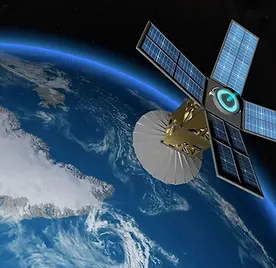
Satellite & Modelling
Identify the Sargassum mats floating and predict likely path, combined with historic trends
Step
04
Active Gathering
Drone vessels tow further booms connected to buoys in the network and hold station or track mats of sargassum to maximise capture.
Step
02
Deploy Smart Buoys
A network of buoys positioned to interact with the main weed lines and drift (Nearshore 60m depth).
Step
05
Collection
Sargassum is captured at the base of the triangular 'trap' and driven into a box trawl net, loaded onto support ship.
Step
03
Deflection or Interception
Optionally crewed drone vessels deploy sea booms between the buoy network or the support vessel creating conical traps or barriers.
Step
06
Sargassum Transported Then Utilised
Sargassum washed and separated is transported to shore for use as construction material additive or bio fuel
